

Item list
Name the biggest pieces and estimate the smaller-item volume.
For a mixed load from one room, a garage, or several storage areas, the useful starting point is a rough inventory and a clear route out of the property.
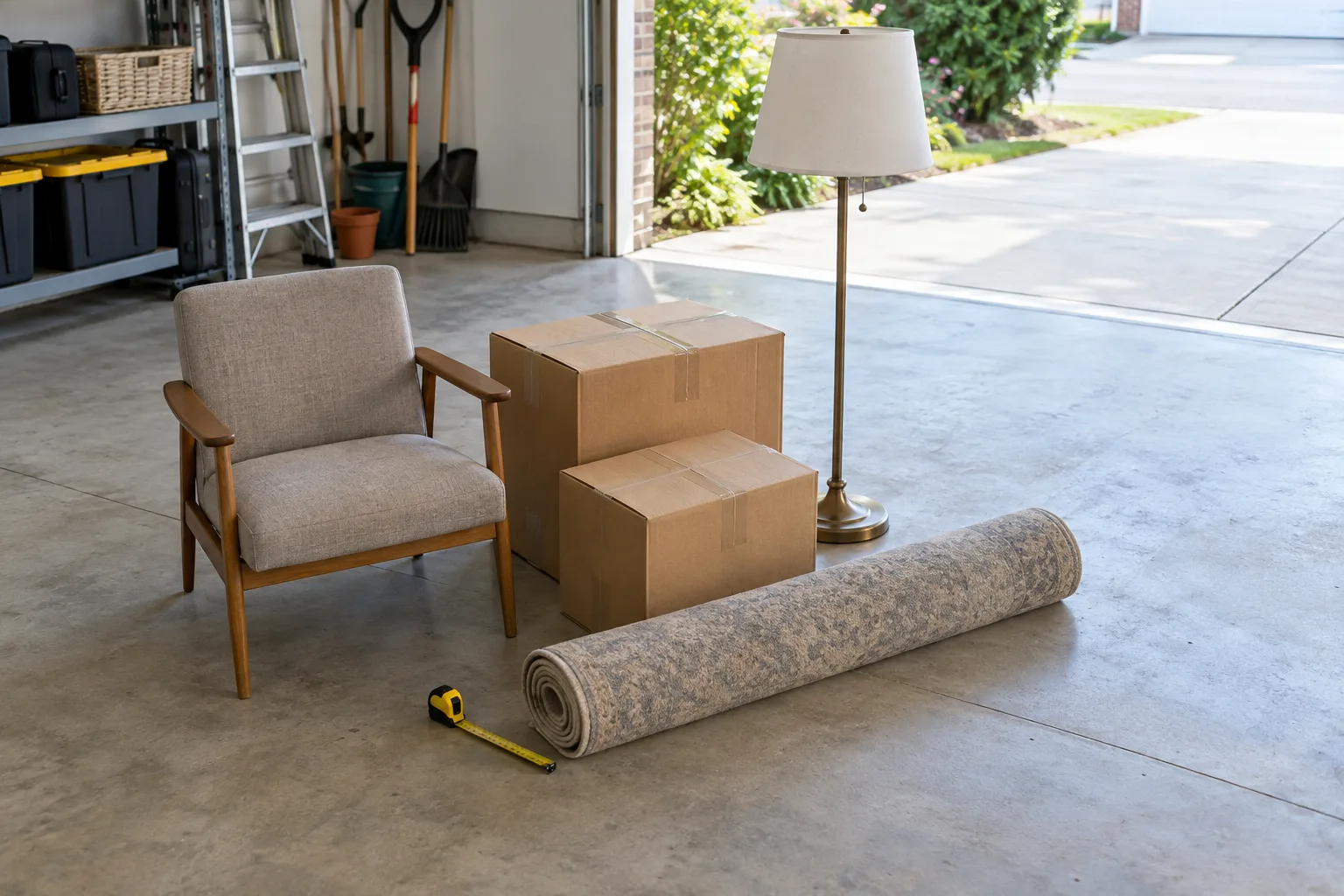
Household removal can make sense when items are too large for a tote, spread across the property, or difficult to transport yourself. The provider must confirm each material and the actual scope.
Give a room-by-room summary, then name the largest or heaviest objects. Mention loose items, bags, stairs, elevators, parking limits, and whether the crew must move through finished living areas.
Name the biggest pieces and estimate the smaller-item volume.

Count stairs and note tight doors, elevators, gates, or long carries.

Explain driveway, curb, loading-zone, and building time limits.
Paint, chemicals, propane tanks, fuel, batteries, televisions, computers, tires, construction material, and anything wet, contaminated, unusually heavy, or attached to the property may have separate rules. Do not mix them into the general pile. Identify them during the call so the provider can confirm whether and how they can be handled.
How to prepare for a junk removal estimate gives you a practical checklist for this type of job. The guide remains useful whether you hire a provider, use a municipal option, or arrange your own disposal.
Have the item list, pickup address, access notes, and a few photos ready. The local provider can then explain the next step and estimate process.