For an eligible City of Buffalo household with no more than three qualifying bulk items, the municipal option may cover the job without a private crew. Private removal becomes a different kind of service: workers can discuss items inside the property, larger mixed loads, carrying, scheduling, and material-specific handling.
The City’s current weekly bulk rule
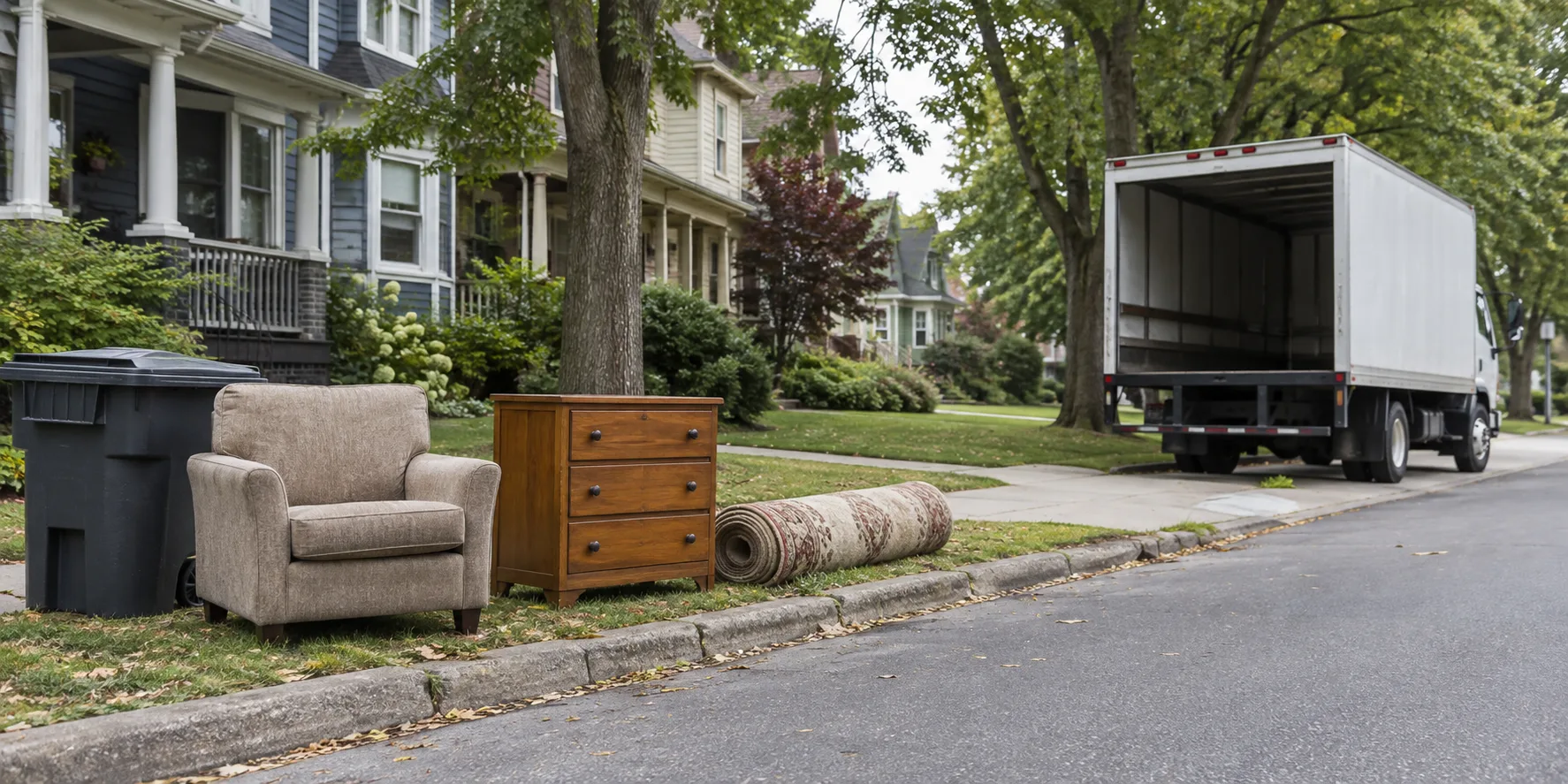
As of September 15, 2026, the City of Buffalo says residents may place up to three bulk items beside the regular tote each week. The City defines a bulk item as too large for the tote, one cohesive piece, and no larger than 12 feet by 3 feet by 3 feet. A dresser with its drawers left inside counts as one piece in the City’s example; removing seven drawers would turn it into eight pieces.
The City says the weekly program is limited to eligible one- and two-family properties. The current page also describes owner-occupancy rules for transfer-station use. Check the property’s eligibility before moving anything to the curb. Read the current City bulk trash page or call 311.
| Situation | City bulk pickup may fit | Private removal may fit |
|---|---|---|
| Load size | Up to three qualifying cohesive pieces under the stated size limit | Larger or mixed loads after provider confirmation |
| Item location | You can safely place accepted items at the curb under City rules | Items are inside, upstairs, in a basement, or across several rooms |
| Labor | You can move the items without unsafe lifting | You need a crew to lift and load |
| Timing | Your regular collection schedule works | You need to discuss a separate appointment |
| Property | The address meets City program rules | The address or situation falls outside those rules |
| Material | Every item is allowed by the City | The provider confirms an alternative route for each material |
Items that do not belong in the weekly bulk pile
The City says televisions, computers, construction debris, tires, paint, and hazardous waste are not accepted at the curb. Its sanitation page directs residents to separate programs for electronics, tires, rechargeable batteries, fluorescent bulbs, paint, oil, gas, pesticides, and propane tanks. Check Buffalo Streets and Sanitation for current drop-off and event information.
Hiring a private provider does not make a restricted item ordinary trash. Name every restricted or questionable material during the call and ask whether it is accepted, prepared separately, or left for the responsible public program.
Count pieces the City’s way
Example curb count
One chair + one dresser with drawers installed + one rolled rug = three cohesive items. Loose drawers, bags, boxes, or dismantled components may change the count. Use the City’s current definition rather than relying on the appearance of one pile.
Put eligible items out only during the allowed window. The City currently says totes and bulk items may go to the curb starting at 7:00 PM on the evening before collection. The same page warns that rule violations may result in a fine.
When carrying help is the deciding factor
A no-cost municipal option still requires someone to move the item to the curb. OSHA’s material-handling guidance says bulky loads can block sight, be hard to grasp, and create lifting risks. Use help or mechanical equipment when a load cannot be handled safely. Do not test a sofa on a stairway to find out whether City pickup will work. Review OSHA’s handling precautions.
A short decision checklist
- Is the property inside the City of Buffalo and eligible for the program?
- Are there three or fewer qualifying cohesive items?
- Is every item allowed at the curb?
- Can the items reach the curb without unsafe lifting or property damage?
- Does the regular collection timing work?
If every answer is yes, confirm the City rule and collection day. If not, review private household junk removal and call the provider with the item list and access notes. The provider must confirm acceptance, estimate, schedule, and disposal terms.
- City of Buffalo Bulk Trash Information, City of Buffalo properties
- City of Buffalo Streets and Sanitation, City of Buffalo residents
- NYSDEC consumer electronic waste guidance, New York State
- OSHA Materials Handling guidance, United States workplace safety guidance